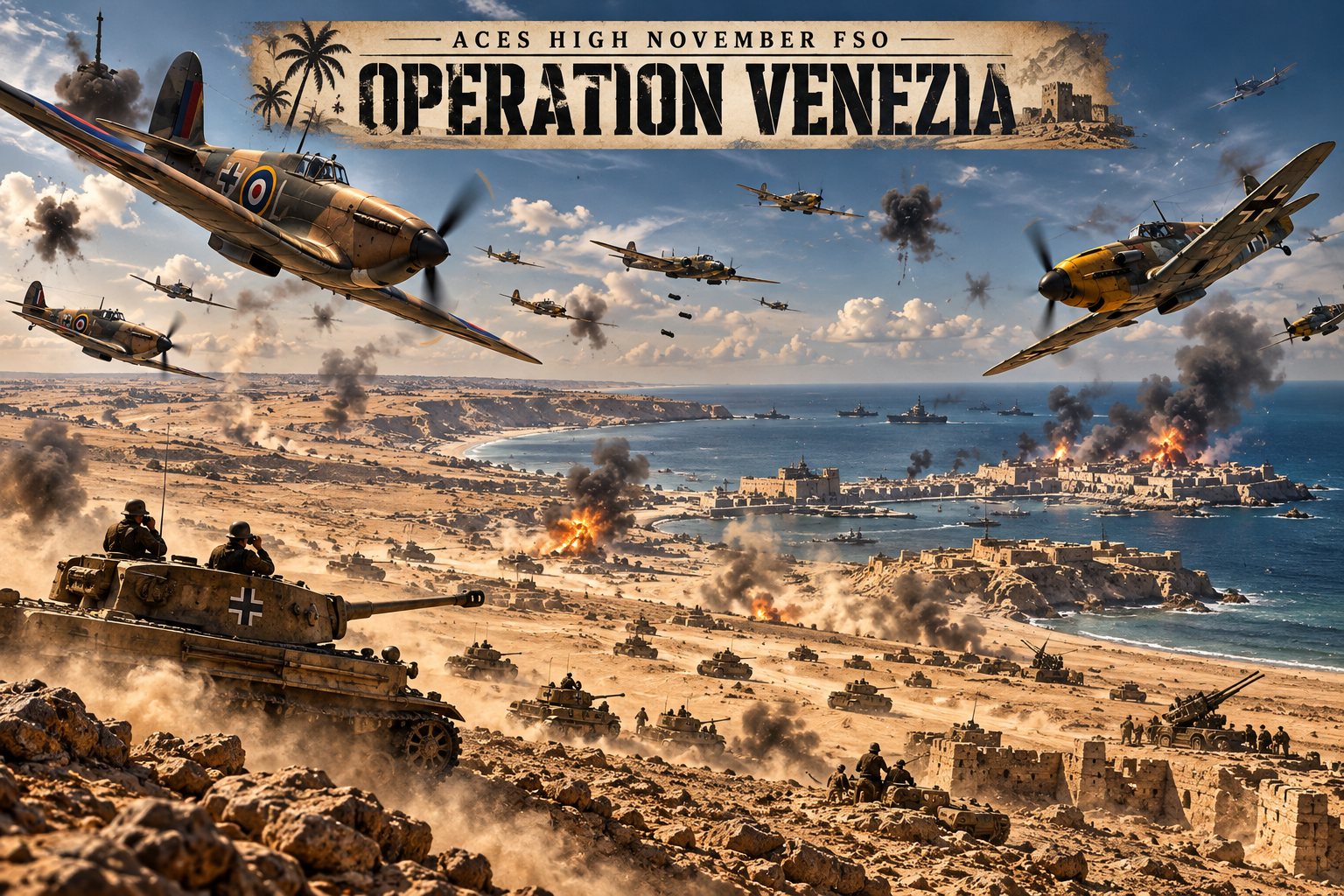
By the spring of 1942, the war in North Africa had reached a critical turning point.
Following months of fighting across the deserts of Libya, British Commonwealth forces had established a defensive line stretching southward from the coastal town of Gazala, approximately 40 miles west of Tobruk. This defensive system consisted of fortified positions, extensive minefields, and heavily defended strongpoints intended to halt any renewed Axis advance toward Egypt.
Behind these defenses stood Tobruk, a strategically vital port whose capture would significantly improve Axis supply operations and threaten the British position in Egypt.
Opposing the British Eighth Army was Generaloberst Erwin Rommel's Panzerarmee Afrika, composed of German and Italian formations. Despite persistent shortages of fuel, ammunition, and supplies, Rommel prepared an ambitious offensive intended to break the Gazala Line, defeat the Allied armored forces, and capture Tobruk.
On the night of May 26, 1942, Rommel launched Operation Venezia.
Rather than attacking the strongest Allied defenses head-on, Axis armored formations swept southward around the Gazala Line before turning north and east into the British rear. What followed was a series of violent armored engagements, desperate defensive actions, and fierce air battles above the desert.
The offensive soon developed into what became known as the Battle of the Cauldron, as Axis forces fought to maintain their positions while surrounded by Allied formations and threatened by dwindling supplies.
After weeks of fighting, the Allied defensive line collapsed. On June 21, 1942, Tobruk fell to Axis forces, along with substantial quantities of equipment and supplies.
The victory marked one of Rommel's greatest successes in North Africa and opened the way for the subsequent Axis advance toward El Alamein.
FRAME 1: 06 November 2026
FRAME 2: 13 November 2026
FRAME 3: 20 November 2026
https://ahevents.net/index.php/fso-current-next-event

